In 2010 the Tories had plan A, deficit reduction, and by and large the British public bought the idea, which was simple, “We have to cut the deficit because sky-high public debt will kill growth and investment and lead to long term depression”. Some of this proved to be wrong but enough of the narrative still works. In all polls that ask the question “who do you trust to manage the economy?” the Tories are in a comfortably lead. We Brits have a long memory and the Brown / Balls bubble will not be forgotten and more recently Ball’s idiotic call for a plan B made him the laughing stock of Westminster.
Despite the Tory’s hard talk on deficit reduction the reality is that progress has been hampered by the coalition’s bargaining (with the illiberal Lib Dems), which ring fenced welfare, the NHS and pensions from the ravages of austerity. Nearly all the cuts imposed in this Parliament have been born by spending departments that receive less 40% of the entire public sector budget. There have been some interesting results – less spending on police has reduce crime, less spending on “enterprise” has helped growth take off, lower spending on Europe has made Europe even less popular and a huge increase in international aid has seen our stock in the world fall dramatically!
Showing posts with label dave. Show all posts
Showing posts with label dave. Show all posts
Monday, 6 October 2014
Thursday, 21 November 2013
Other Men’s Flowers
There are plenty of people who live their life at work as is
it were some intellectual exercise, choosing to take decisions that are for the
great good but have a terrible impact on their own careers. Field Marshal the Lord Wavell was one, he
chose to pick a fight with an obdurate and all-powerful Churchill and was
summarily dispatched to pull together his famous anthology of poetry “Other Men’sFlowers” rather than take any further part in the Second World War. Britain lost her most talented commander but
gained a literary gem.
One might expect
this kind of selfless attitude from a Wykehamist but it’s wholly unexpected, and
unwelcome, from an Etonian and a politician to boot!
 |
| If you don't have it, do buy it |
Thursday, 31 October 2013
On yer bike
The result of the 2015 election in the UK will probably depend on two things; the effect of economic recovery on living standards and the success David Cameron has in renegotiating our terms of membership within the European Union. In short, if the recovery delivers improvements in living standards the coalition will probably be re-elected and if the European negotiation is successful the Tories might expect to form a majority government. I have argued for a long while that Labour’s crisis in living standards is erroneous; as the marginal nature of disposable income means that we will see a substantial recovery in take home pay over the next 18 months. The European issue is more vexed. Mr Cameron has two options on Europe, a Harold Wilson like renegotiation (nothing changes at all) or a Margaret Thatcher like renegotiation, which achieved some changes but within the broadly unchanged framework.
 |
| Here come the Bulgarian's |
Friday, 20 September 2013
Handbrake Politics
Although we are only 65% of the way through the duration of this government’s ‘fixed term’ it’s probably a good time assess the achievements of the coalition; as the next 18 months will be more about electioneering than government. This audit is obviously vital for the LibDems and Nick Clegg as they had to prove two things over the last 3 years, firstly that they are fit for government and secondly that coalition is better than one party government. Nick Clegg’s speech at the recent LibDem party conference offered us the radical message, that the last three years of coalition is not just be an historical aberration but a permanent fixture. His talk of "bringing down the two party system" and ending what he calls the "clapped-out politics of red and blue" is a bold pitch for a party with such a low standing in the opinion polls - about 10% share!
Thursday, 12 September 2013
Ding Ding Round Three of the Cameron Miliband Rivalry
All great rivalries are dependent on time to reach maturity, conflict in repetition is addictive, the history adds to the fame and to the pain. So the show down between Obama’s and Assad has none of the piquancy that the second gulf war delivered – the animosity between the Bush family and Sadam Hussein was palpable because of the history. In the same way, who can remember the first match between Federer and Nadal - a lame affair fought out in the Miami Masters in 2004, not a harbinger for the excruciating excitement their later battles would provide. And what about the Ashes, even when the quality of the cricket is poor the weight of history turns every match into a nerve shredding struggle. Sadly these intense rivalries seldom materialise in the world of politics and this is particularly true in the UK.
Tuesday, 27 August 2013
Beating the Bully Boy Assad
In the macho world of global politics appeasement is the dirtiest of all words. Failure to stand-up to the bully, whether in the play-ground or at the United Nations is, for most Westerners, a cardinal sin. The moral maze is simple to navigate when the bully turns his attention to neighbouring states, we should be free to step in to protect the interest and sovereignty of a defending nation – so with Kuwait in the first Gulf War – but when the violence is contained within the Bully’s own borders the maze becomes exponentially more complex. Accordingly, politicians who turn their military might on their own people are amongst the most reviled of men, but calibrating the correct response is problematic in the extreme.
Thursday, 8 August 2013
Mondeo Man Trap can win Cameron the next election
The tide has turned on the British economy; after the tsunami of the credit crunch we have been beached on the mudflats of no/low growth of for four years. There have been moments when it seemed the after-shocks would create move waves, the Euro crisis being the most obvious risk. There have even been moments when recovery seemed to be ebbing our way only to evaporate into the stinking sands of a flat-lining growth. In December last year I blogged that we were at the beginning of the end and amazingly I think I called the low water mark correctly and 8 months on the sparkling waters of recovery our flooding in bringing relief to many parts of our economy.
This change in the tide is very welcome but growth is still weak and localised. Most of the benefits are being felt in London and its hinterland and only in pockets outside the south east of England. More worrying our neighbours in Europe are still up to their knees in thick mud and going nowhere fast. With a new governor at the Bank of England and only 20 months of the coalition government to run people in high places can't afford another false start, they need a full spring tide to come flooding in to all parts if our economy.
 |
| Low water - but the tide is coming in! |
Sunday, 4 August 2013
The Full Monty on Osborne's economic policy
In the five years that have elapsed since the global financial crisis erupted in the summer of 2008 living standards in the UK have dropped sharply (in 2008 a single person earning £13,000 would have reached the minimum they needed to get by. if their wage had risen in line with average increases, they would now be earning £14,000 – which is roughly three thousand short of the £16,850 salary needed to cover the same basic standard of living today). During this period we have had two governments who have been attempting to nurse our broken economy back to health. In the first two years of the crisis we had the 'fag end' of a long running Labour government, who had little stomach for the fight. The only Labour minister who came out of this period with any credit was Alistair Darling the who, despite constant interference from Gordon Brown (self styled saviour of the world), did an excellent job of first aid on a patient that was dead on its feet. His sensible approach to encouraging consumption through sales tax reductions and the motor car recycling scheme combined with a massive blood transfusion of QE made sure that Britain survived the trauma of an imploding financial services industry and the cataclysmic effect this had on credit markets and the tax take. The rest of the Labour government were in shock as they watched 13 years of neo-socialism unwind before their eyes.
Thursday, 18 July 2013
Less is More More or Less
Three years ago many were expecting the worst from austerity, how could we possible keep the lights on whilst slashing public expenditure - crime would soar, schools would fail and there would be rioting on the streets. But how different things look now, a new light now shines on the old problems and there is a shake up to the accepted liberal order.


Monday, 1 July 2013
Money can't buy me love - but it'll get me new hip
In the last month there has be a sea change in British politics, which threatens to overturn the consensus that has held sway since 1945. All the major political parties have finally recognised that there needs to be a more sustainable relationship between the size of our economy and the scale of our welfare state. We are all children of Beveridge and his report (published in 1942), which set the roadmap for defeating the ‘the five greats’ - squalor, ignorance, want, idleness and disease. It’s clear that much of his mission is now accomplished and its time to redefine these ‘greats’ (mine would be Debt, Greed, Intolerance, Ignorance and Security) but the vision can wait, all the focus is now devoted to the funding model for our state provided services.
Wednesday, 26 June 2013
Winning Ugly - with Clegg
Barack Obama has confirmed that Nick Clegg is better looking than David Cameron and for the British voter both look pretty ugly at the moment! With less than two years to run before the next general election it’s time for David Cameron to assess two things: Firstly will it be a good election to win; secondly if it is worth wining is majority government advisable?
Tuesday, 7 May 2013
Lord Lawson Gives Up On Europe
The intrigue
around the UK's Europe Union membership ratcheted up several notches today as Lord Lawson (once the
ardent follower of the European Exchange Rate Mechanism ERM) proclaimed himself to
be in favour of a complete EU exit; quite an about face. Would Lawson have made such a pronouncement
without the surprise Ukip performance in the local elections? I rather doubt it. Was he put up to it and who stands to gain? Goodness only knows but the conspiracy theories
will start to reverberate.
However, what
has become clear is that the issue of Europe is set to rival the economy as the
overriding political issue in the UK.
 |
| Lawson in his pomp |
Friday, 3 May 2013
The UK lurches to the Right
The dust is settling after a traumatic and interesting set of local elections in the UK. The results are still being gathered up by there is only one story- the rise of UKIP, who achieved 26%+ of the popular vote in the areas where they had candidates. At the last general election in 2010 UKIP garnered only 3.1% so they have had a meteoric rise. It still puzzles me that such a sizable proportion of the voting population would vote for a single issue party, a party of protest? An opinion poll published on the same day as local election results reinforces the picture that UKIP have moved from being also ran's in the domestic political scene (they have been important for a while in Euro elections) to being the third party, displacing the Liberals.
Sunday, 28 April 2013
Avoiding the triple dip
The flags were re-hoisted following Maggie Thatcher’s funeral on the
news that Britain has avoided a triple dip recession (for the time being). The chancellor George Osborne must have had a
broad grin on his face although he was careful to be cautious about the future. Before we all get carried away we should point
out that the economy is 2.7pc smaller than its pre-recession peak in 2008.
The importance of Thursday’s news on GDP cannot be underestimated, not for
its economic and social impact but for the political breathing space it
provides David Cameron - more of this later. The announcement on Thursday, contained
as much bad news as good - Manufacturing shrank by 0.3pc but that was down to a
terrible January, February and March have been stronger.
Tuesday, 2 April 2013
David Cameron's Achilles Heel - The poor quality of his backbenchers
The latest opinion poll has the UK political parties standing at CON 29%,
LAB 42%, LD 11%, UKIP 13% (YouGov 28th March) . These numbers make the Parliamentary Conservative
Party very nervous about the party’s electoral prospects. With two years to go before the election in
2015 the back benches are panicking, demanding in no particular order: “changes
at the top”, “a lurch to the right” or “a deal with UKIP”.
The poor polls for David Cameron are also the driving force behind the (ill conceived) plots against him. Sadly for the Tory cannon fodder our prime minister is not moved by this unrest, David Cameron sees himself in an altruistic light and will keep doing the “right thing”, certain his place in history is secure - The first coalition prime minister since 1940 and he’s adding to his legacy with new legislation to legalize gay marriage and the reform of the welfare state, education and the NHS. David Cameron may want to win in 2015 but it’s not the end all and be all for him.
Interestingly Peter Oborne writing a day later in the Daily Telegraph has a similar view on the danger his own party present -
The poor polls for David Cameron are also the driving force behind the (ill conceived) plots against him. Sadly for the Tory cannon fodder our prime minister is not moved by this unrest, David Cameron sees himself in an altruistic light and will keep doing the “right thing”, certain his place in history is secure - The first coalition prime minister since 1940 and he’s adding to his legacy with new legislation to legalize gay marriage and the reform of the welfare state, education and the NHS. David Cameron may want to win in 2015 but it’s not the end all and be all for him.
 |
| Declining standards in the Tory Pary |
Given the economic legacy and continuing global recession it is unsurprising that the Tory’s performance in the polls is so poor. Even
without these economic problems we would expect a sitting government’s opinion
poll rating to slip in a mid-term period, as has happened with every government
since democracy was invented. Adding more woe
to these polls is the rise of the UKIP protest vote, but both of these factors
should not be unexpected or overly worrying to smart professional politicians.
And here is the rub, the real problem David Cameron has is the quality
of backbenchers in his party, and this is a problem of his own making. After his election to the Tory leadership in
2005 Cameron, spotting the obvious weakness of his posh background and
education. He therefore decided to broaden the base of parliamentary party. He instituted the A list and he is now
reaping his reward. Since God was a boy the
Tory party has attracted the cream of our public schools and best universities,
who understood the importance of calmness and solidarity. The new intake of 2010 and to some degree
2005 are a pale imitation of their forbearers; careerist and second rate intellectually
they have no idea how to tough things out.
A smarter bunch of MPs would realise that it’s still very possible that David
Cameron can win in 2015 - if he has some
luck with the economy and he can resolve
the impending immigration landslide from Romania and Bulgaria. Added to this the British electorate will
have a further two years to smoke out the opportunistic (but untalented) Ed Miliband and his very poor shadow cabinet. So, probably the biggest risk to re-election is the
irrational behaviour of his own party and that’s his own fault!
http://www.telegraph.co.uk/news/politics/david-cameron/9969582/David-Camerons-critics-are-wrong.-Hes-on-the-verge-of-something-great.html
http://www.telegraph.co.uk/news/politics/david-cameron/9969582/David-Camerons-critics-are-wrong.-Hes-on-the-verge-of-something-great.html
Tuesday, 12 March 2013
Westminster Mash - digest of political posts
We are a tipping point in British politics, seldom has there been so much to be interested in. We have the election in 2015, the Scottish independence referendum next year and an impending European Union in/out referendum in 2017. To heighten the interest we have a coalition government who will have to tread the line between being in power together and in (quite bitter) opposition to each other at the election. This Post covers a range of subject that I have blogged about in an attempt to cover this fascinating but complicated landscape.
Firstly, there is the referendum in Scotland and its potential impact on English politics, a vote for independence would be terminal for Labour.
http://getwd50.blogspot.com/2013/02/the-lothian-question.html
Secondly, as a social media new boy, I looked at the anger of the Left and what motivates the school boy insults that Ed Miliband and his followers can't resist.
http://getwd50.blogspot.com/2013/02/campaign-against-priviledge.html
Thirdly, the Eastleigh bi-election provided a great insight to some of the problems the major parties
face. The irrelevance of Labour in the south of England, The anti Government sentiment that is bringing down the libdems and the lack of talent the Tories have among their prospective candidates. All of these issues resulted in a spectacular protest votes that UKIP cashed in on.
http://getwd50.blogspot.com/2013/02/touch-of-class.html
Some people think David Cameron is a poor Prime Minister because he is too posh, others think he is
lazy. My guess there is something else holding him back.
http://getwd50.blogspot.com/2013/02/oh-dave.html
Looking back at how Gordon Brown saved his party from annihilation at the last election one gets a
clue as to how David Cameron might approach the problem of electoral unpopularity - two Posts cover the ground.
http://getwd50.blogspot.com/2013/03/in-tight-spot.html
http://getwd50.blogspot.com/2013/03/a-polite-bribe.html
Finally, we look at David Cameron's mid term / life crisis and his pathetic attempts to woe the younger generation.
http://getwd50.blogspot.com/2013/03/the-grey-vote.html
I took the recent speech verbatim from David Cameron's recent up date on the economy - basically sticking to plan A - and created a word cloud and this is what we get, not exactly Milton Friedman is it?

 |
| Where did it all go wrong? |
Firstly, there is the referendum in Scotland and its potential impact on English politics, a vote for independence would be terminal for Labour.
http://getwd50.blogspot.com/2013/02/the-lothian-question.html
Secondly, as a social media new boy, I looked at the anger of the Left and what motivates the school boy insults that Ed Miliband and his followers can't resist.
http://getwd50.blogspot.com/2013/02/campaign-against-priviledge.html
Thirdly, the Eastleigh bi-election provided a great insight to some of the problems the major parties
face. The irrelevance of Labour in the south of England, The anti Government sentiment that is bringing down the libdems and the lack of talent the Tories have among their prospective candidates. All of these issues resulted in a spectacular protest votes that UKIP cashed in on.
http://getwd50.blogspot.com/2013/02/touch-of-class.html
Some people think David Cameron is a poor Prime Minister because he is too posh, others think he is
lazy. My guess there is something else holding him back.
http://getwd50.blogspot.com/2013/02/oh-dave.html
Looking back at how Gordon Brown saved his party from annihilation at the last election one gets a
clue as to how David Cameron might approach the problem of electoral unpopularity - two Posts cover the ground.
http://getwd50.blogspot.com/2013/03/in-tight-spot.html
http://getwd50.blogspot.com/2013/03/a-polite-bribe.html
Finally, we look at David Cameron's mid term / life crisis and his pathetic attempts to woe the younger generation.
http://getwd50.blogspot.com/2013/03/the-grey-vote.html
I took the recent speech verbatim from David Cameron's recent up date on the economy - basically sticking to plan A - and created a word cloud and this is what we get, not exactly Milton Friedman is it?

Monday, 11 March 2013
Two Fairy Tales for the Economy - Plan A and B
Like the little Dutch boy David Cameron has his 'finger in dyke' of the coalition's economic policy. Having set a course in 2010 to deal with the deficit through government spending cuts, supported by a monetary easing, there is now a flood of alternative advice coming from all quarters!

Britain's economic plight in 2010 was particularly bad as we had a fiscal deficit amounting to nearly 10% of our GDP annual, the highest of any major economy. This was caused by the emergence of a 'structural' deficit, which amounted to 6% of our GDP (lost receipts associated with financial services and associated sectors) added to the deficit caused by the general economic downturn, which amounted to a further 3% of GDP. When international benchmarks tell us that any deficit over 3% is unsustainable to be 200% over this was pretty dire.
The government responded by pushing through an austerity package that has 'reduced' government spending by £67 billion. We are still only 40% through this programme, which has been extended out to 2018 - well into the next Parliament. It was hoped that reductions in government spending would be off-set but the private sector growth and this has been successful in part. Many new jobs have been created, but continued spending on welfare, health and interest on the debt have meant that the deficit is still way too high.
Unfortunately the deficit is not the only issue. There exists in the UK high levels of personal debt, which is linked to a very high levels of private house ownership. Our ability to apy down this debt has been hindered by drop in household incomes caused by private sector wage freezes and inflation in energy and food costs. So our problems are two fold. The state is too big and expensive and the private sector is burdened with falling disposable incomes.
The challenge is to try to get the economy growing and specifically the private sector. And there are three options - Keep calm and carry on (Plan A), increase government borrowing to finance growth (Plan B) or increase the rate of austerity whilst giving tax breaks to generate consumer demand (Plan C). In greater detail -
Plan A - The Governments plan
Stick with the austerity, which is planned to become more intense over the next two years and use quantitative easing (government buying up assets from the banks - mostly Government Bonds) to increase the availability of credit in the system. According to David Cameron this is the only way forward.
Plan B - Promoted by Labour and other supply-side commentators
Ease back on the austerity and lengthen the time it takes to pay down the deficit. Increase government spending on capital projects to kick start the economy and have a more active industrial policy- build roads, schools etc and fund apprenticeships.
Plan C - The one no one talks about
Accelerate government spending cuts and use some of this slack to cut taxes to raise real incomes and generate consumer spending and economic growth.
Of these options I think plan A is the least likely to work - everything is too tight, the government has to create slack to promote growth. so that leaves B and C. The Keynesian approach set out in B is now a bit dated no one really believes that government officials are capable of conjuring up growth that has any long term benefits. So I think its got to be Plan C. We need to aggressively cut down the size of our state and this means all the state, including: Welfare and Pensions, Health (NHS) , Defence and Education. And in return we should give direct help to increasing disposable incomes, which will drive economic activity. To do this we should reduce VAT (sales tax). Specifically the general rate of VAT should be reduced from 20% to 15% and we should zero rate VAT in sectors where we want to generate business growth - like building work on brown field sites.
 We must turn our attention (although its hard to do) from the economically inactive (the unemployed, the ill, the old and the lazy) and focus on giving people in work a boost. So to end on another fair story - by heaping most of the pain of austerity on to middle income earners we are killing the goose that lays the golden egg, we need to throw the goose some grain!

Britain's economic plight in 2010 was particularly bad as we had a fiscal deficit amounting to nearly 10% of our GDP annual, the highest of any major economy. This was caused by the emergence of a 'structural' deficit, which amounted to 6% of our GDP (lost receipts associated with financial services and associated sectors) added to the deficit caused by the general economic downturn, which amounted to a further 3% of GDP. When international benchmarks tell us that any deficit over 3% is unsustainable to be 200% over this was pretty dire.
The government responded by pushing through an austerity package that has 'reduced' government spending by £67 billion. We are still only 40% through this programme, which has been extended out to 2018 - well into the next Parliament. It was hoped that reductions in government spending would be off-set but the private sector growth and this has been successful in part. Many new jobs have been created, but continued spending on welfare, health and interest on the debt have meant that the deficit is still way too high.
Unfortunately the deficit is not the only issue. There exists in the UK high levels of personal debt, which is linked to a very high levels of private house ownership. Our ability to apy down this debt has been hindered by drop in household incomes caused by private sector wage freezes and inflation in energy and food costs. So our problems are two fold. The state is too big and expensive and the private sector is burdened with falling disposable incomes.
The challenge is to try to get the economy growing and specifically the private sector. And there are three options - Keep calm and carry on (Plan A), increase government borrowing to finance growth (Plan B) or increase the rate of austerity whilst giving tax breaks to generate consumer demand (Plan C). In greater detail -
Plan A - The Governments plan
Stick with the austerity, which is planned to become more intense over the next two years and use quantitative easing (government buying up assets from the banks - mostly Government Bonds) to increase the availability of credit in the system. According to David Cameron this is the only way forward.
Plan B - Promoted by Labour and other supply-side commentators
Ease back on the austerity and lengthen the time it takes to pay down the deficit. Increase government spending on capital projects to kick start the economy and have a more active industrial policy- build roads, schools etc and fund apprenticeships.
Plan C - The one no one talks about
Accelerate government spending cuts and use some of this slack to cut taxes to raise real incomes and generate consumer spending and economic growth.
Of these options I think plan A is the least likely to work - everything is too tight, the government has to create slack to promote growth. so that leaves B and C. The Keynesian approach set out in B is now a bit dated no one really believes that government officials are capable of conjuring up growth that has any long term benefits. So I think its got to be Plan C. We need to aggressively cut down the size of our state and this means all the state, including: Welfare and Pensions, Health (NHS) , Defence and Education. And in return we should give direct help to increasing disposable incomes, which will drive economic activity. To do this we should reduce VAT (sales tax). Specifically the general rate of VAT should be reduced from 20% to 15% and we should zero rate VAT in sectors where we want to generate business growth - like building work on brown field sites.

David Cameron's mid-life crisis - finding younger voters
David Cameron is having a full blown mid life (term) crisis. After three years in office he is looking around for a bit more fun in his life hoping to trade up to a younger better looking set of supporters! It will not amaze you that the Conservative Party draws much of its support from the older generations, in fact Tory support trails Labour in all the age profiles except the over 65s. As common sense dictates, conservatism is something that we grow into as we age.

Interestingly, the old tend to be more politically motivated and at the last general election, 76% of over-64s voted, compared with just 44% of 18- to 24-year-olds. Like the chap above, doggedly determined to participate in our democracy!
The coalition government recognising their importance have tried to support the elderly poor maintaining universal benefits for pensioners of free television licences, free bus passes and winter fuel payments. But quietly the coalition has been less kind on middle class pensioners who have savings of their own. The policy of QE / asset purchasing has has the effect of keeping interest rates very low reducing returns for savers and probably driving up retail prices by artificially devaluing the Pound. So this group is hurting and they feel let down, they won't be voting Labour any time soon but are there other siren voices that will be more difficult to ignore?
To try to re-balance the demographic support in the party David Cameron has pursued a modernising agenda with Gay Marriage as the flagship policy. Unsurprisingly old people are overwhelmingly opposed to gay marriage a YouGov poll on the eve of the vote found that 80% of 18- to 24-year-olds support changing the law to allow gay marriage. Among people aged 60 or over, support stands at just 31%. Mr Cameron attempts to improve his appeal to younger voters is based on a firm belief that he is, when confronting Labour, his parties strongest electoral asset (probably correct). By setting himself against the core vote and many of his MPs, Mr Cameron believes he will have improved his standing with the under 60s and boost his prospects of re-election in 2015.
Cameron's tactic might have worked in a straight two party scrap but the rise of UKIP raises all kinds of uncertainties. Specifically, UKIP have targeted David Cameron as a "poor excuse for a Tory" and his strategy to attract young voters may backfire badly if UKIP can get traction beyond being a protest vote. Many disaffected older voters might be tempted to switch allegiance if they feel that "their Party" is now led by a man enthralled to the younger generation - They certainly don't see Nigel Farage as a hoody hunging, computer games addict who supports equal marriage.
 |
| Farage - flag waver for the Right |
Sunday, 10 March 2013
Kick me Kate
Having read Hilary Mantel’s books on the life of Thomas Crowell (Wolf Hall and Bring Up The Bodies) I am an undiluted fan.
You could buy her books at http://www.amazon.co.uk/s/ref=nb_sb_ss_i_0_4?url=search-alias%3Daps&field-keywords=wolf+hall&sprefix=wolf%2Caps%2C264
She has become a literary super star and the acclaim is well deserved. It’s clear from her books that she is very much a man’s girl, her ‘affair’ with Cromwell is both touching and obvious. In contrast she is somewhat dismissive of the powerful and great women who played their part in the story of our break with Rome and the birth of ‘modern’ Britain.
 |
| Cromwell would not have approved - he was always loyal to the crown |
Perhaps we should not be surprised by her “venomous attack” on the Duchess of Cambridge in a recent lecture. Some of this is actually a criticism of the painter who produced the Duchess’s awful official portrait. But there is no denying that Mantel used highly provocative language – describing the Duchess as appearing “to have been designed by committee and built by craftsmen”. She is touching on a very raw nerve when she suggests that “Kate seems to have been selected for her role of princess because she was irreproachable: as painfully thin as anyone could wish, without quirks, without oddities, without the risk of the emergence of character. “She appears precision-made, machine-made, so different from Diana whose human awkwardness and emotional incontinence showed in her every gesture.” The Prime Minister rightly said. "I think she writes great books, but I think what she's said about Kate Middleton is completely misguided and completely wrong.” The tabloid newspapers were less polite!
 |
| Kate's official portrait |
We should not be sorry for the media backlash that Mantel
has had to face; She knew that the
speech would be covered by the media and as a thoughtful historian she would have
been aware of the risk she was taking in making ‘painful’ connections between
Kate and Diana. There is a problem that some
smart people have, they believe cleverness is an excuse for mad manners and
Hilary Mantel is going to find out that this is a mistaken premise, an
expensive mistake. Whilst guest
appearances in The Guardian (not well paid) may not dry-up she will miss out on
many other lucrative engagements and book sales will be effected.
Tuesday, 5 March 2013
A polite bribe
In my last post on the economy (http://getwd50.blogspot.com/2013/03/in-tight-spot.html) I looked at how Gordon Brown tried to cajole the electorate into voting Labour with a massive increases in tax credits prior to the 2010 election (£87 Bn) and it nearly paid off. Considering the economic back drop at the time to run the Tories as close as they did was a good effort. David Cameron needs a similar strategy - but he has less wriggle room and the Liberal Democrats breathing down his neck.
To have any chance at the next election he needs to give the hard pressed middle income earners some help on disposable income and also support savers. Before we look at his options let us first consider the voters, and for simplicity sake let's divide the electorate into three groups - not easy as you can see:
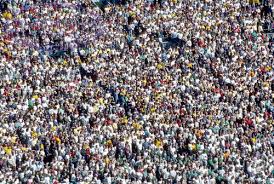

To have any chance at the next election he needs to give the hard pressed middle income earners some help on disposable income and also support savers. Before we look at his options let us first consider the voters, and for simplicity sake let's divide the electorate into three groups - not easy as you can see:

1. Idle Idiots - these are those either too stupid or rich to vote or too idol think about their options (die hard tory and labour voters). It's possible UKIP might appeal to the stupid group in the same way that the BNP sometimes get's non-voters interested. Anyway we can ignore this group as being too fickle and tough to convince.
2. Brown Brothers - these are the people who benefited most under Labour. Mostly in public services or on welfare they got lucky with tax credits, state pensions and ridiculously generous pay increases. Again, we can ignore this group they will never vote Tory
3. Dave's Darlings - Predominantly working in the private sector or retired with some savings of their own. These middle income earners have been the main target for the austerity measures. This group have been hit hardest by the changes to VAT, child benefit and private sector wage deflation. Pensioners and those near retirement have been further penalised by the effects of QE and the resulting low interest rates that have killed investment returns on savings.
If we put Dave's Darlings together with the core Tory vote there is a chance the Tories can remain the largest party in the House of Commons. To do this David Cameron needs to find a way of improving disposable incomes for this the third group, without scaring off the financial markets.
Reducing income tax is too costly and scatter gun, so probably the best way to help middle income families and the economy would be to cut VAT and this needs to be done with some thought so we don't suck in too many imported goods. I would cut the standard rate to 15% and zero rate on a targeted basis - domestic energy (down from 5%) building work (to drive employment), meals out (to help local businesses and give us all a lift).
Secondly I would try to help savers who have had a terrible run. I would offer government backed corporate bonds for both Lloyds and RBS with a three year fixed rate return of 10% p.a. The offer would apply to any UK resident where there is no top rate tax payer in the family, a maximum investment would be capped at £5k.
The money raise by the bonds would be used to accelerate the restoration of these banks for a 'Privatisation' (selling off the government stake) at the end of this year and the money raised could be use to pay for the VAT reduction. I would also give any corporate bond investor a guaranteed discount of 15% on the flotation price. If each bank raised £10 bn, 4 million savers would have a chance to make £500 a year, or £1,500 over three years. This would have the additional benefit of mending these two banks which have been holding the whole economy back. These two measures would appeal directly to the Tories primary target market turn Dave's Darling into loyal supporters
The money raise by the bonds would be used to accelerate the restoration of these banks for a 'Privatisation' (selling off the government stake) at the end of this year and the money raised could be use to pay for the VAT reduction. I would also give any corporate bond investor a guaranteed discount of 15% on the flotation price. If each bank raised £10 bn, 4 million savers would have a chance to make £500 a year, or £1,500 over three years. This would have the additional benefit of mending these two banks which have been holding the whole economy back. These two measures would appeal directly to the Tories primary target market turn Dave's Darling into loyal supporters
So come on Dave there's enough time - but only just enough!
Subscribe to:
Posts (Atom)
